Raising Bilingual Kids with the Help of AI: A Research-Backed Practical Guide for Parents on Dual-Language Learning, Choosing the Right Tools, and Building Routines That Actually Work
$23.99
Our Guarantee
We want this to genuinely help. If it's not the right fit, contact us within 14 days of purchase for a full refund — no complicated hoops.
A few practical notes:
- This is delivered as an emailed download link — please double-check your email at checkout
- If your file doesn't arrive, is the wrong file, or won't open, we'll fix it or refund you right away
- To request a refund, contact us via our Contact page — approved refunds are processed within 5–7 business days back to your original payment method
Delivery
Once your payment is confirmed, we'll email your download link straight to your inbox.
Your download link arrives by email within a few minutes. Not seeing it? Check your spam/junk folder, or get in touch via our Contact page and we'll resend it right away.
🛡️ 14-day money-back guarantee · Instant email delivery
Description
What’s Inside
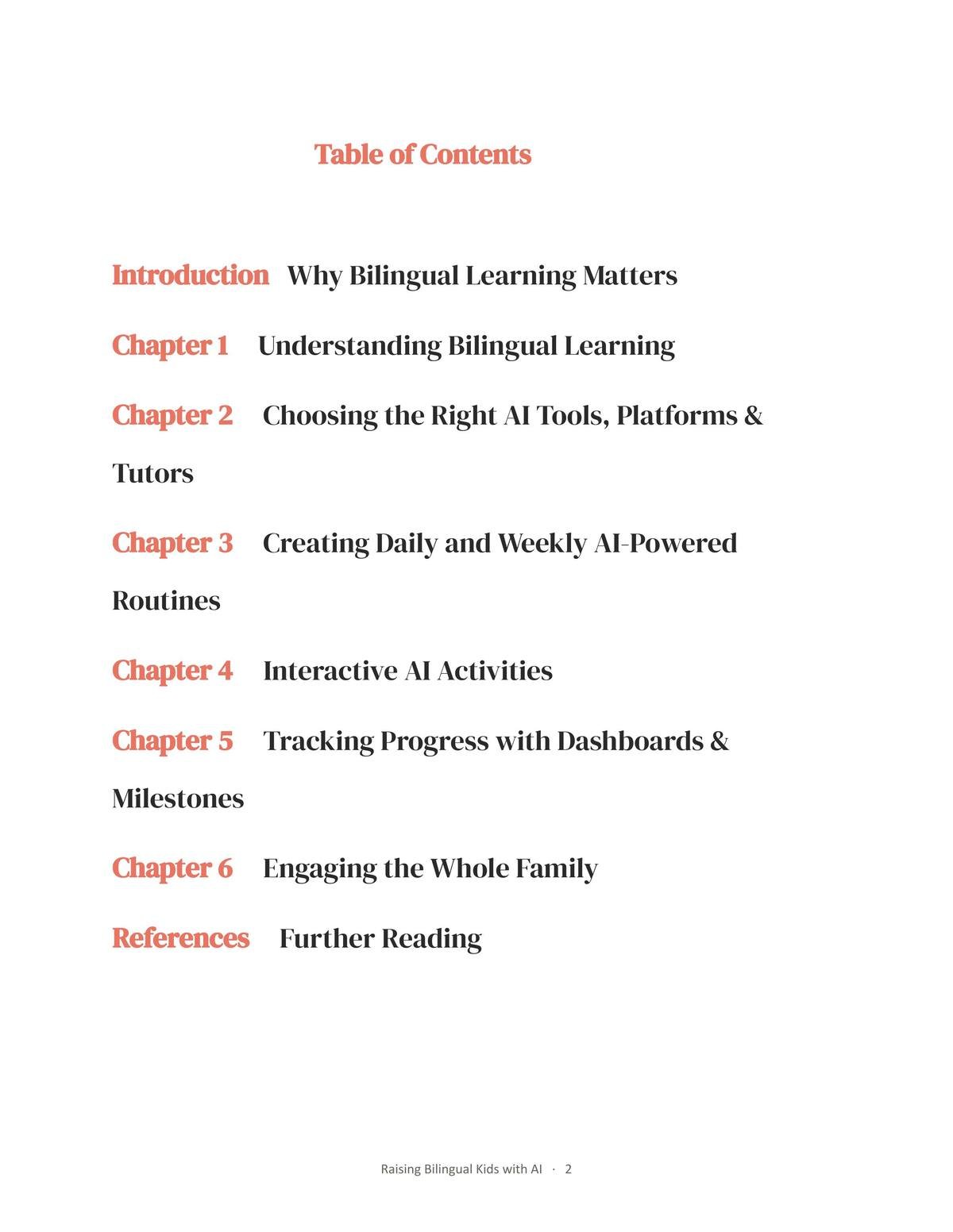
Introduction: Why Bilingual Learning Matters
Before diving into strategies and tools, this guide starts with something more important: peace of mind. The introduction addresses the conflicting advice parents hear from relatives, teachers, and the internet, and replaces worry with a grounded, evidence-based foundation for everything that follows.
Chapter 1: Understanding Bilingual Learning
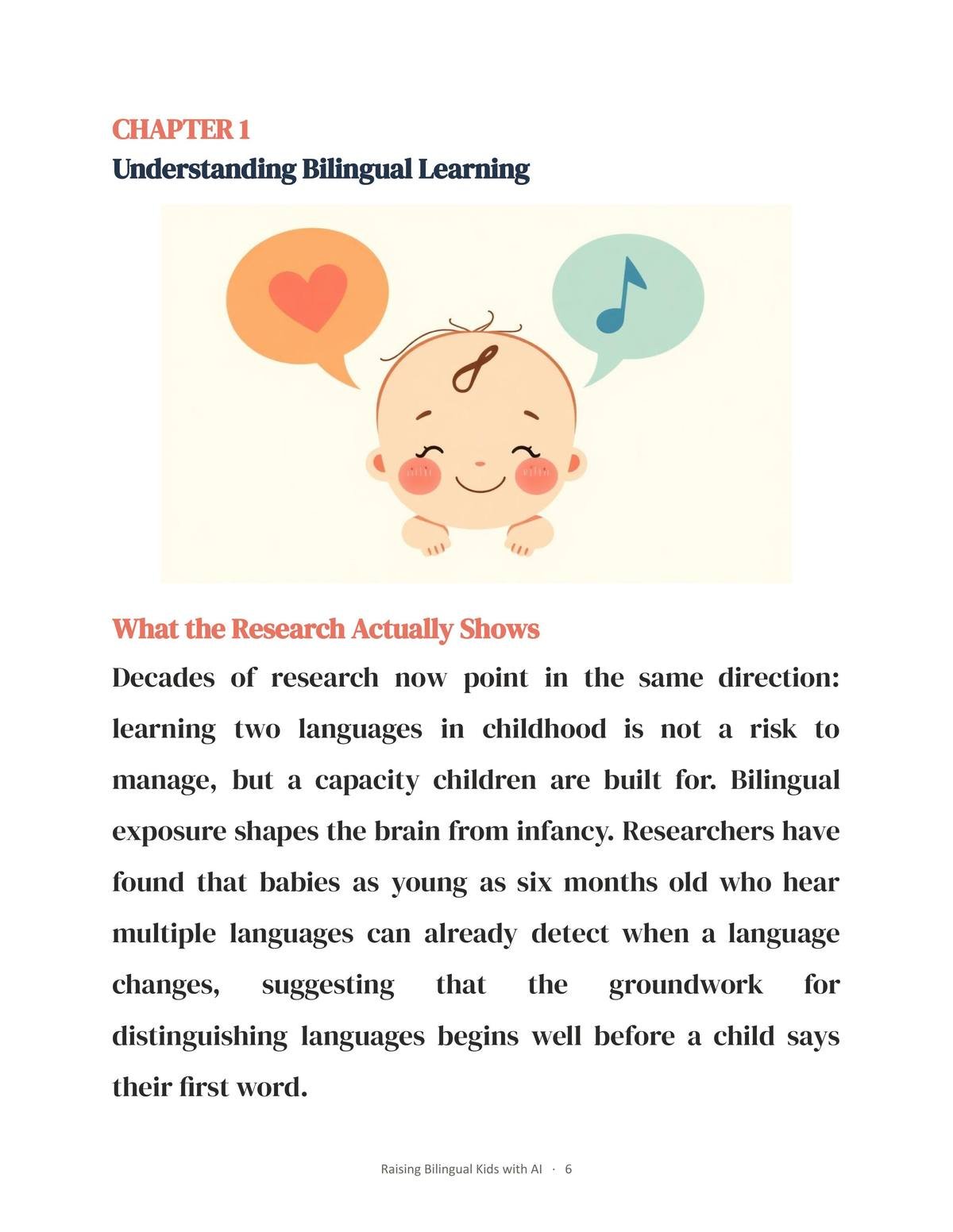
This chapter tackles the science head-on. You’ll learn what decades of research actually show about raising bilingual children — including the cognitive, social, and long-term brain health benefits that consistent dual-language exposure produces. Just as importantly, it dismantles the most persistent myths parents encounter, including the belief that two languages will delay speech, that code-mixing signals confusion, or that children with developmental differences shouldn’t be exposed to a second language. It also covers the most common family language strategies — One Parent One Language, minority language at home, time-and-place approaches — and explains why consistency matters far more than picking the “correct” method.
Chapter 2: Choosing the Right AI Tools
The language-learning app market is crowded, and the marketing around it can be loud. This chapter gives you a grounded, parent-focused breakdown of what AI language tools are genuinely good at — on-demand conversation practice, pronunciation feedback, spaced repetition, personalised content — and where they fall short. It covers the key categories of tools worth knowing, raises important chatbot safety considerations for young children flagged by pediatric health organisations, and ends with a straightforward five-point checklist you can apply to any tool before committing to it.
Chapter 3: Creating Daily and Weekly AI-Powered Routines
Consistency beats intensity every time when it comes to language learning. This chapter helps you build a realistic daily and weekly rhythm that fits around your existing family life rather than asking you to overhaul it. Grounded in AAP and WHO screen time guidance, it includes a practical sample daily schedule — from morning narration to bedtime stories — and weekly planning tips that make language exposure feel natural rather than like another item on the to-do list.
Chapter 4: Interactive AI Activities
This is the hands-on chapter. Organised by skill area, it offers concrete activities for storytelling, pronunciation and speaking practice, and vocabulary games — many of which work alongside whatever app or platform your family has already chosen, and several of which need no app at all. The chapter also reinforces a point every credible source in this guide agrees on: AI tools work best as a supplement to real human conversation, not a replacement for it.
Chapter 5: Tracking Progress with Dashboards and Milestones
What does “on track” actually look like for a bilingual child? This chapter provides a clear age-by-age milestone guide — from six-month-old infants detecting language switches to school-age children developing their two languages at different rates — so you’re comparing your child to the right yardstick. It also explains how to use in-app dashboards without over-interpreting them, what real-world signals of progress to watch for, and when a plateau is normal versus when it’s time to involve a bilingual speech-language pathologist.
Chapter 6: Engaging the Whole Family
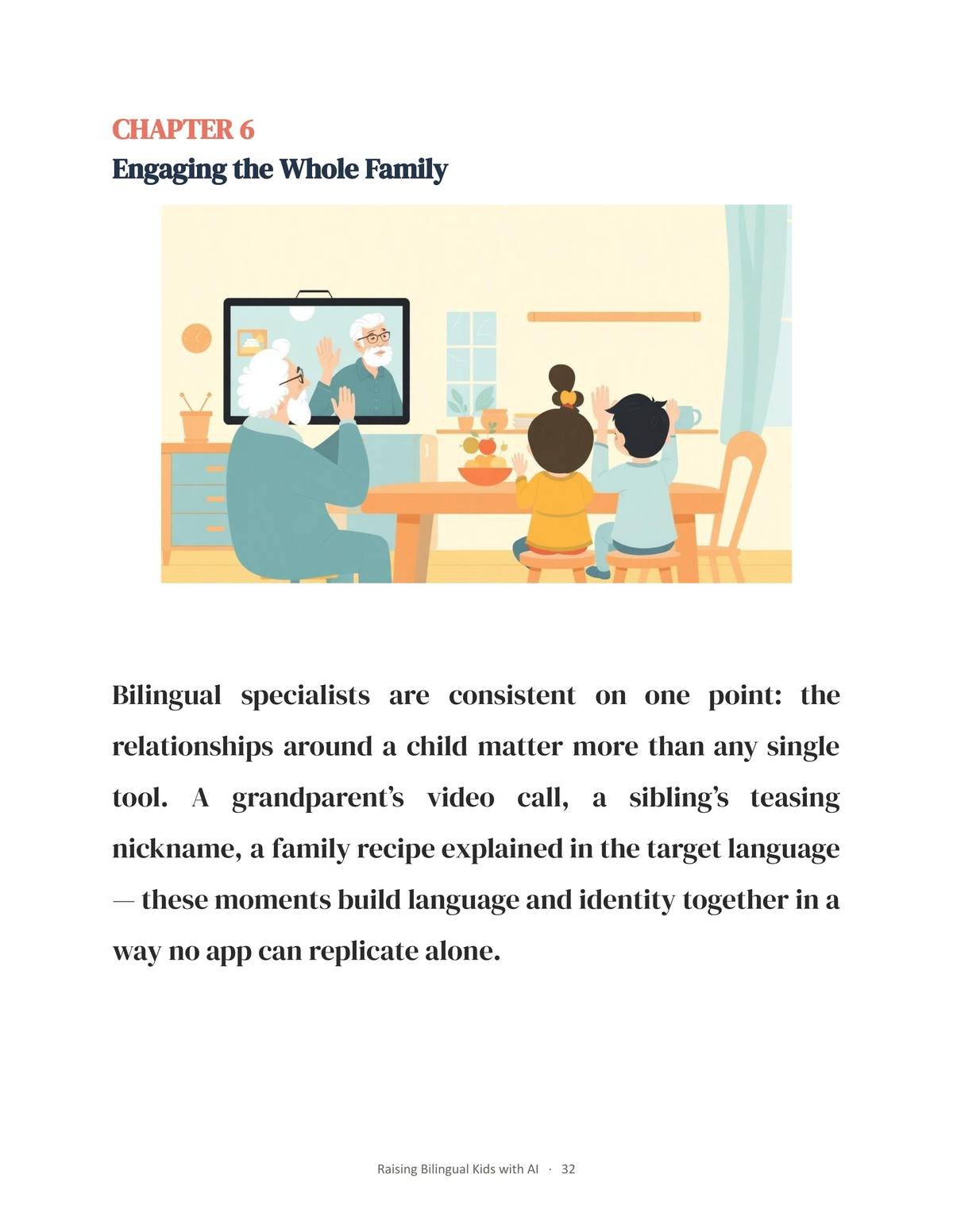
No app can replicate what relationships do. This final chapter focuses on the human side of bilingual learning: how to bring extended family members — especially grandparents — meaningfully into the process, how to handle siblings who default to the majority language, and how leaning into cultural traditions, food, music, and community makes language feel like an identity rather than a lesson. It closes with a simple summary of the habits that families who sustain bilingualism long-term tend to share.
Whether you speak the second language fluently or are learning alongside your child, whether you have a toddler or a school-age kid, and whether you’re just starting out or trying to stay consistent after years of effort, this guide meets you where you are.
Because the best bilingual learning plan isn’t the most expensive one or the most complicated one. It’s the one your family can actually stick with — joyfully, consistently, and over time.


Reviews
There are no reviews yet.