

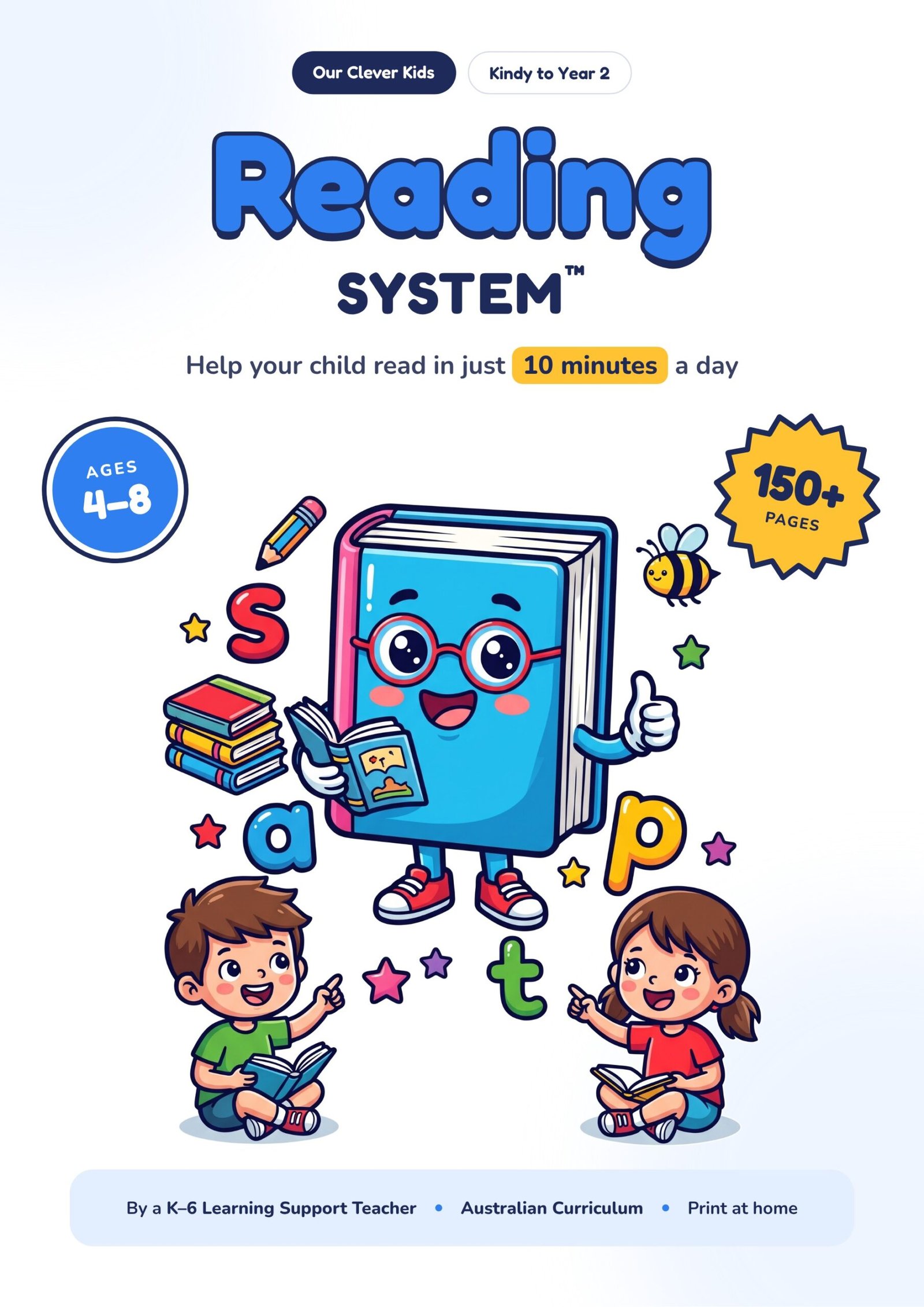



Our Clever Kids Reading System™ – Help Your Child Learn to Read in Just 10 Minutes a Day (150+ Printable Pages, Kindy–Year 2)
$19.00
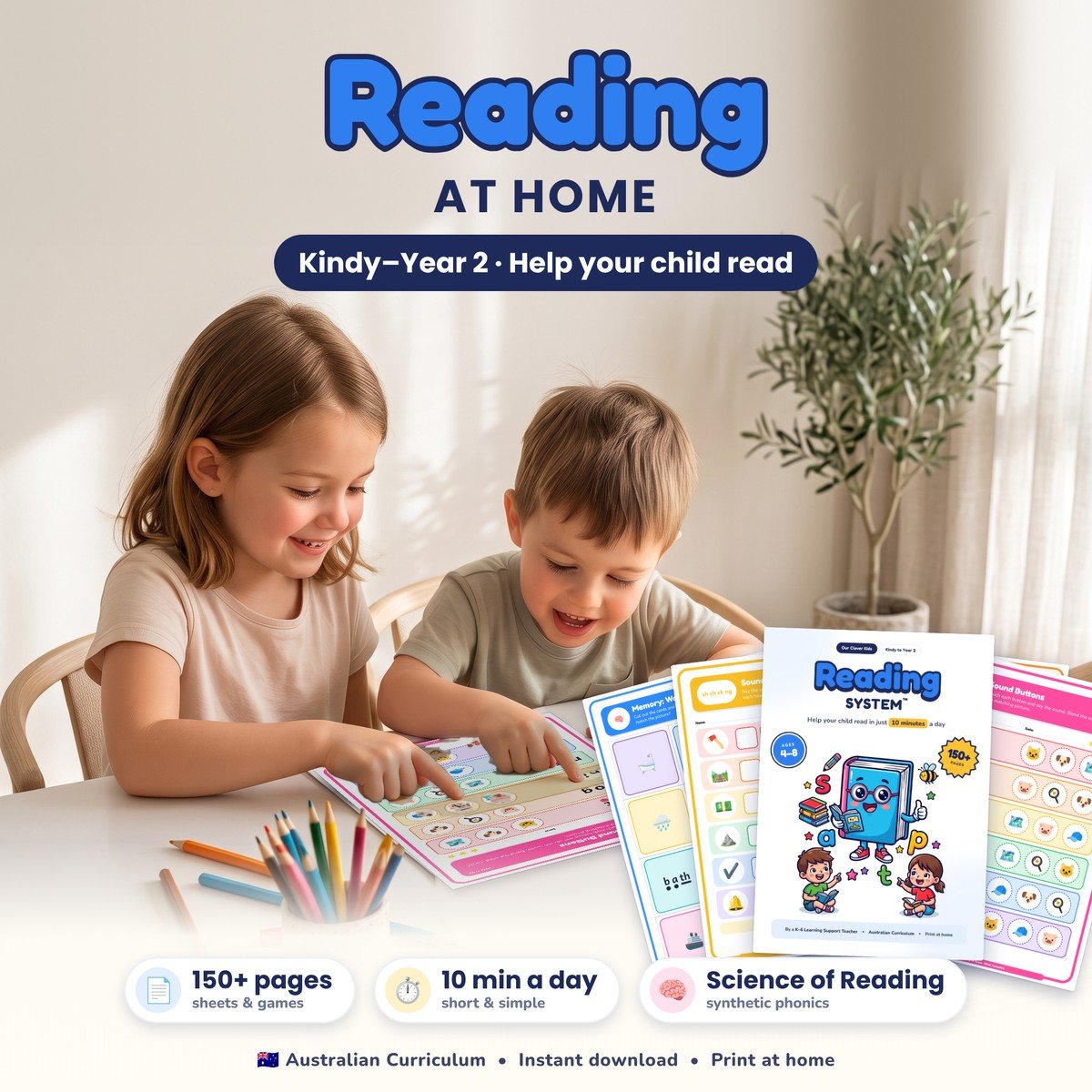
10 minutes a day to a confident reader. A done-for-you, step-by-step phonics system for Kindy/Prep to Year 2, with 150+ printable pages and activities. No teaching experience needed.
Everything you get:
✔ The Step-by-Step Reading Plan + Quick Start Guide ($27 value)
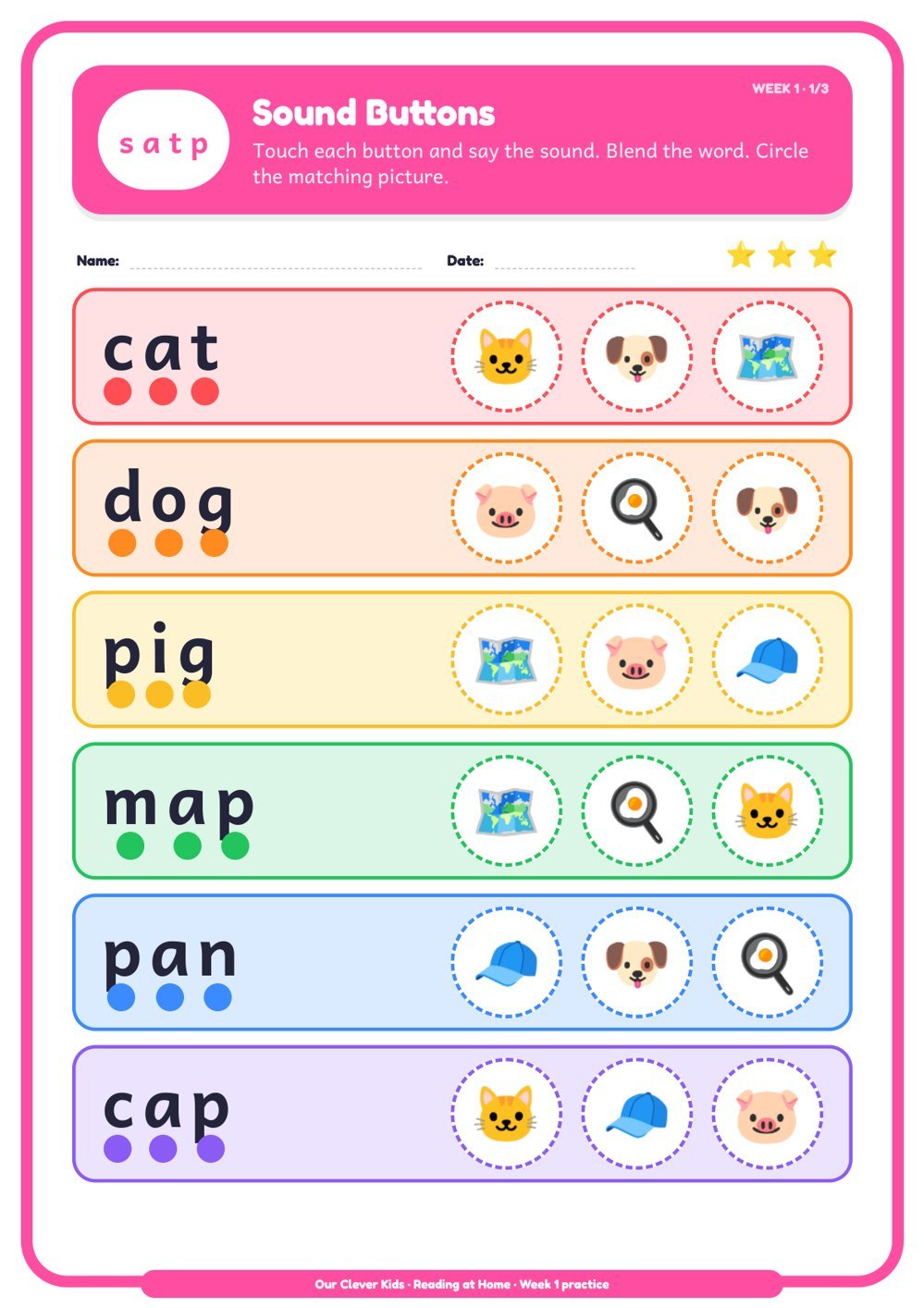
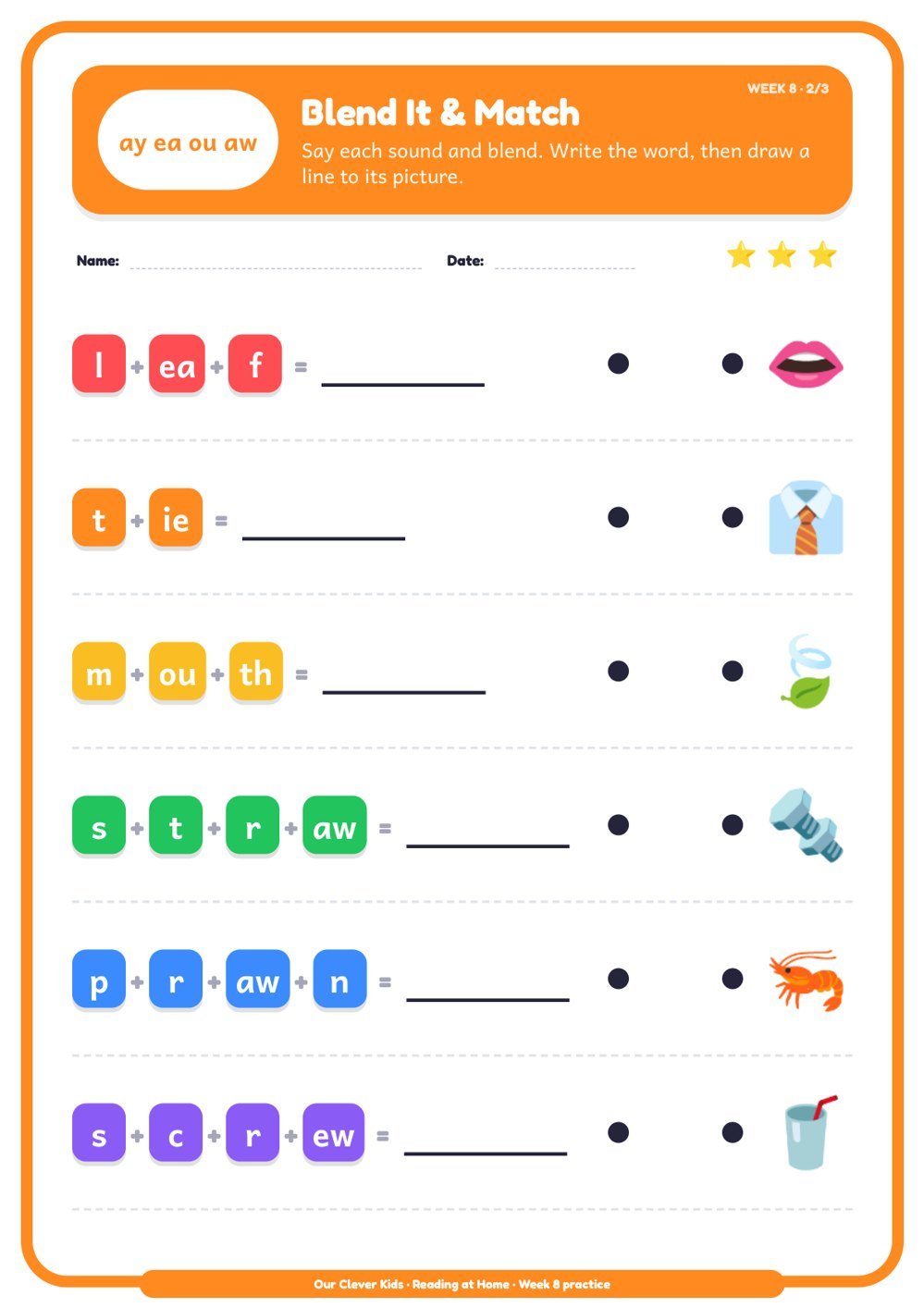
✔ 24 Practice Sheets: Sound Buttons, Blend It & Sound Boxes ($24 value)
✔ BONUS: 100+ “Make It Stick” Activities for sh, ch, ai, igh & more ($37 value)
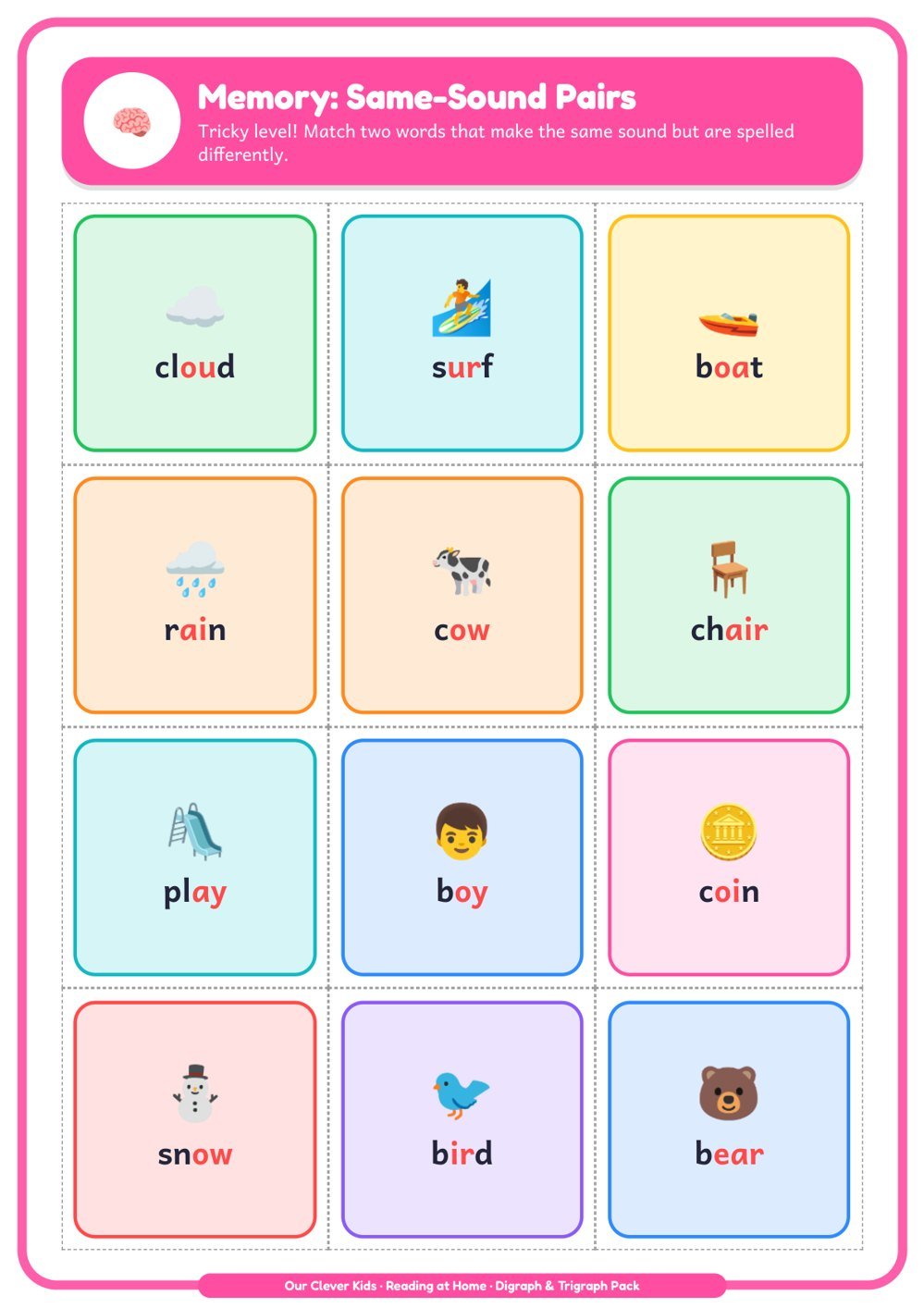
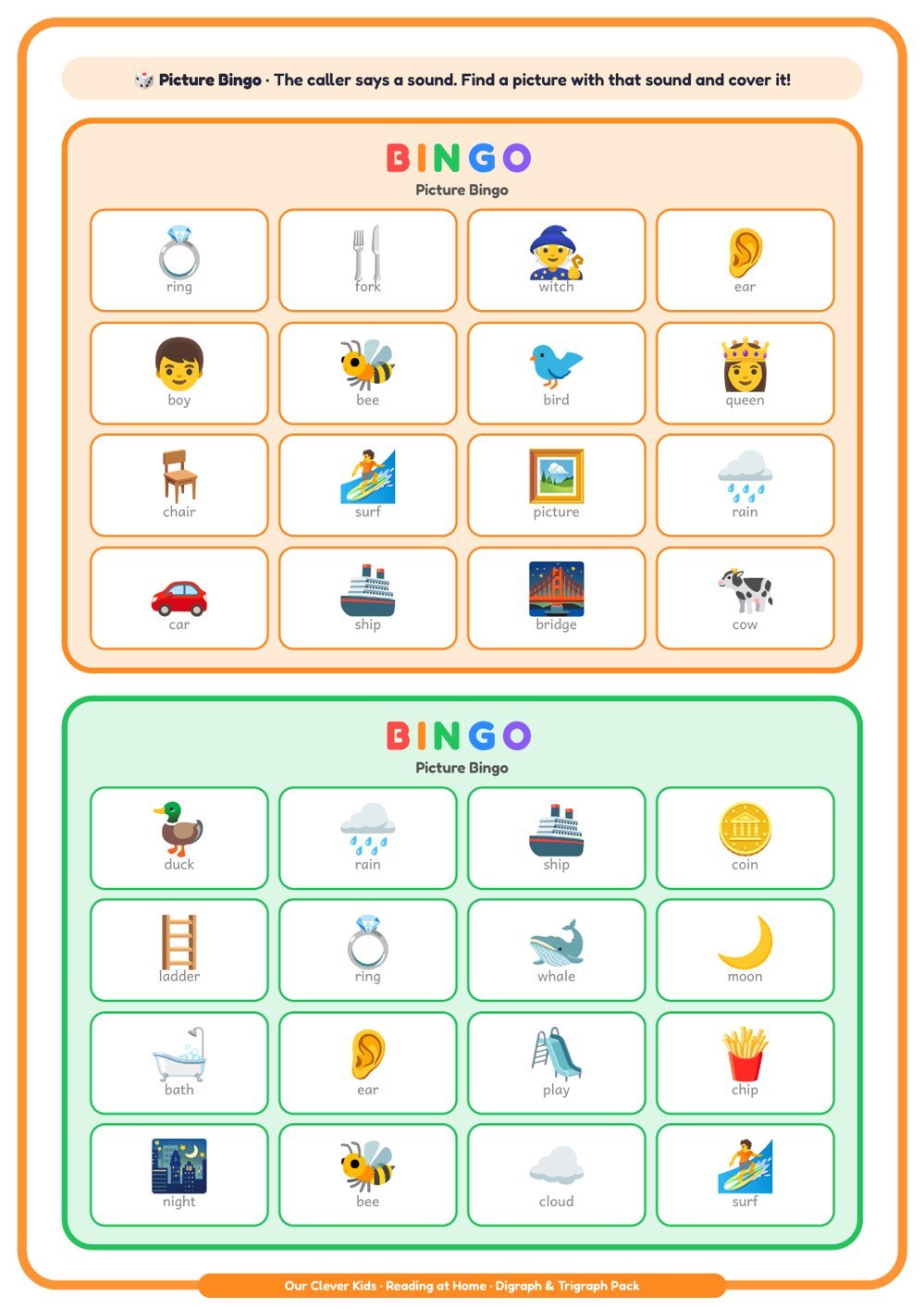
✔ Bingo, Memory Games & 8 Quick Reading Games ($15 value)
✔ Sound Charts, Sound Cards & Tricky Word Cards ($17 value)
✔ Year 1 Phonics Check Alien Word Practice ($9 value)
✔ Reading Tracker + Super Reader Certificate ($5 value)
Total value: $134 · Yours today for $27
Kindy–Year 2 · 150+ pages · Instant download · 14-day money-back promise
Our Guarantee
We want this to genuinely help. If it's not the right fit, contact us within 14 days of purchase for a full refund — no complicated hoops.
A few practical notes:
- This is delivered as an emailed download link — please double-check your email at checkout
- If your file doesn't arrive, is the wrong file, or won't open, we'll fix it or refund you right away
- To request a refund, contact us via our Contact page — approved refunds are processed within 5–7 business days back to your original payment method
Delivery
Once your payment is confirmed, we'll email your download link straight to your inbox.
Your download link arrives by email within a few minutes. Not seeing it? Check your spam/junk folder, or get in touch via our Contact page and we'll resend it right away.
🛡️ 14-day money-back guarantee · Instant email delivery

Independent review
“For any parent who wants to support their child's learning with confidence, Leanne's guides are a valuable and reassuring resource.”
Kelly Tunny
Early Childhood Educator · Opened 4 preschools · 20 years in early learning
Read Kelly's full review ▾Show less ▴
Leanne has a real gift for taking research on memory, play-based learning, and early language development and making it practical, friendly, and doable for busy families. Each book combines evidence-based ideas with activities, templates, and printables that parents can use right away, without special equipment or expertise. Her tone is encouraging and never preachy. She reminds parents that small, everyday moments of connection matter most, and she handles screen time, AI safety, and developmental concerns responsibly. Leanne handles specialised topics such as bilingual development and early signs of autism with accuracy and sensitivity, always grounding her advice in established research and encouraging parents to seek professional guidance where needed. For any parent who wants to support their child's learning with confidence, Leanne's guides are a valuable and reassuring resource.
About Kelly
Kelly Tunny, trained in early childhood education at Macquarie University, opened her first childcare centre in 2006. Over the next two decades she established Berowra Cottage Children's Centre and Kincumber Preschool Kindergarten, then went on to build two more centres from the ground up in Cardiff and West Wallsend in the Newcastle region. She has helped thousands of young children take their first steps into learning and has guided their families along the way. She has also raised three boys, so she knows first-hand what it's like to keep curious little minds busy at home.
Description
Your child isn’t behind. They just need to be shown how reading works.
You read with them every night. You point at the words. You try to help. But they guess instead of sounding out, mix up b and d, or say “I can’t read” before they’ve even tried. And you’re not sure what the school is teaching, so you worry you might be doing it wrong.
The good news: reading isn’t a talent some kids have and others don’t. It’s a skill that’s taught, one sound at a time. The Our Clever Kids Reading System™ shows you exactly what to do, in just 10 minutes a day, using the same approach Australian schools use. Over 150 colourful printable pages, all in one download.
How it works
1. Find your starting point. A 2-minute checklist tells you exactly where your child is, so they start with success, not frustration. Already reading short words? Skip ahead.
2. Learn the sounds, 10 minutes a day. The same 5 simple steps every time: warm up, new sounds, read, spell, celebrate. The plan moves through 8 easy stages, from first sounds like s-a-t to words like night, boat and play. Go at your child’s pace. Faster is fine, and so is slower.
3. Practise until it sticks. Every stage comes with fun practice sheets your child can do on their own or with you. Then the bonus activity pack, bingo and memory games lock in the trickier sounds, like sh, ch, ai and igh, until reading them feels easy.
Everything you get
- The Step-by-Step Reading Plan: one colourful page per stage with the sounds, tricky words, word lists, a sentence to read, spelling practice, a game and a “watch for” tip
- 24 Practice Sheets for your child: Sound Buttons, Blend It & Match, Sound Boxes and Magic e, three for every stage
- BONUS: 100+ “Make It Stick” Activities for letter teams like sh, ch, th, ai, ee, igh and air: sound buttons, real-or-alien words, cut-and-build words, mini stories and more
- Bingo and Memory Games: sound, picture and word bingo, plus three levels of memory cards
- Quick Start page + 10-Minute Session guide: no need to read the whole book first
- “Where should my child start?” checklist
- Picture Sound Charts for every sound from s a t p to ay, ew, oy
- Printable Sound Cards and Tricky Word Cards to cut out and flash every day
- Alien Word Practice for the Year 1 Phonics Check
- 8 Quick Reading Games your child will ask to play again
- Reading Tracker + Super Reader Certificate
- Plain-English Glossary, so school words like “digraph” and “blending” finally make sense
- When to Talk to the Teacher: gentle signs to watch for
Built on the Australian Curriculum and the Science of Reading
Written by Leanne Meyers, K–6 Learning Support Teacher (Special Education degree), the plan follows systematic synthetic phonics: children learn letter sounds in a set order, blend them to read and segment them to spell. It draws on the Australian Curriculum: English (v9), the Australian Education Research Organisation (AERO), the NSW and Victorian Departments of Education, the national Teaching Reading inquiry (Rowe Report) and the Australian Government Literacy Hub. A full research page is included.
Our promise to you
Use it for 14 days. If it isn’t right for your family, email us and we’ll refund every cent. No forms, no fuss.
Questions parents ask
I’m not a teacher. Will I know what to do?
Yes. Every page tells you what to say and do, with tips for the most common mix-ups. If you can follow a recipe, you can follow this plan.
How much time does it take?
10 minutes a day. Short and often works better than long and rare, and it’s easy to fit in before dinner or after school.
What age is it for?
Kindy/Prep to Year 2 (about ages 4–8). It also suits older children who still need to strengthen their phonics.
Will it help with the Year 1 Phonics Check?
Yes. It covers the sounds the check uses, and the alien word practice builds the exact skill it looks for: sounding out words your child has never seen. We never drill the test. Calm, regular practice is all that’s needed.
My child finds reading really hard. Will it help?
The plan is explicit, step-by-step and multisensory, which suits many children who learn differently. It’s designed to sit alongside, not replace, support from your child’s school or specialist.
Is it screen time?
No. It’s all printable and done together at the table.
How do I get it?
Straight after checkout you’ll get a download link on screen and by email. Print the pages you need and start tonight.
Start tonight
One session with a tutor often costs more than this whole system. Give your child 10 minutes a day of sounds, games and encouragement, and watch them become a confident reader.


Jess K –
My son is in Kindy, and I honestly didn’t know I’d been teaching him the sounds wrong (“muh” instead of “mmm”). The pure sounds box on page 5 fixed that in about two minutes. We do the 10-minute session after dinner most nights, maybe 4 days a week rather than 5. Cutting out the sound cards took a while, and I’d suggest printing them on thicker paper because ours got bent fast. We’re in Week 4, and he can now blend three-letter words on his own.
Nathan R –
I liked that every session follows the same five steps, so I didn’t have to plan anything. My daughter (Year 1) loves the alien words. She thinks reading made-up words like “vap” is hilarious. We used the checklist on page 8 and started at Week 3 instead of Week 1, which saved her from being bored. We repeated Week 5 because the digraphs were harder, and the book says that’s fine. It’s not fancy, but it’s clear.
Sienna B –
I bought this mainly because I was worried about the Year 1 Phonics Check, and the page explaining it calmed me down. My son resists anything that feels like homework, so some nights we only got through the warm-up and the game. He’s proud of colouring in the stars on the tracker. I’d have liked a few more decodable sentences per week, because we ran out and had to reuse them. Overall it’s good value, and I can see progress.
Phil K –
School newsletters kept saying “digraph” and “segmenting,” and I had no idea what they meant. The “Words teachers use” page explained it in plain English. My daughter likes the picture on the sound chart for each letter, especially the octopus for “o.” Point and sweep felt awkward for me at first, but by the second week she was doing it with her own finger.
Pat T –
My son (Year 2) was behind and hated reading with me because it always ended in tears. Keeping it to 10 minutes made the difference. He knew it would end soon, so he didn’t fight it. It took us closer to 10 weeks than 8 because we repeated two weeks, but we finished. The weekly game was his favourite part, and he asked to stick the Super Reader certificate on the fridge. He’s not a confident reader yet, but he’ll now try sounding out words without being asked.